
How to Choose a Curtain Range for Your Shop
A strong curtain range is not the one with the most designs. It is the one where customers can quickly see a difference between the options, find something that suits the room and leave with the size they actually need. For an independent retailer, that usually means being selective rather than simply extending the fixture every time a new design becomes available.
The best place to start is with balance: colour, pattern, function, heading, size and price all need enough coverage to give the customer choice, but not so much that half the range starts competing with itself.
Start with the jobs customers are trying to solve
Some customers walk in with a colour in mind. Others are trying to darken a bedroom, replace a tired pair of curtains or find something that works on the pole they already have. If the range only makes sense when someone understands collection names, it is harder to shop than it needs to be.
A useful range gives clear answers to a handful of common needs: dependable neutrals, a few stronger colours, plain and patterned choices, lighter and heavier looks, and clearly identified functional options where those benefits are verified for the individual product.
Build the colour backbone before chasing every trend
Neutrals do a lot of the work in curtains because they are easy to place in existing rooms. Grey, cream, natural, stone and warmer beige tones can all earn space, but six similar shades do not automatically give the customer six meaningful choices.
Look for contrast within the neutral part of the range. A warm natural should feel different from a cool grey. A textured plain should offer something a flat plain does not. A subtle pattern can sit beside both without making the whole section feel busy.
Then add colour with purpose. A deeper green, blue, blush or rust tone can give the display a focal point and help the range feel current, even if those colours sell in smaller numbers than the core neutrals. The aim is not to predict one winning colour; it is to make sure the customer who wants something beyond grey has somewhere sensible to go.

Mix plain, texture and pattern so every design has a reason to be there
Customers often compare curtains side by side, and this is where small differences matter. If three designs are all plain, mid-grey and similar in handle, the choice can feel arbitrary. A stronger assortment gives each design a clearer role.
Plain curtains are easy to coordinate. Texture adds interest without introducing a strong motif. Pattern gives customers a more decorative option and can become the visual lead in a display. You do not need equal numbers of each, but you do need enough distinction that staff can explain the difference in a sentence.
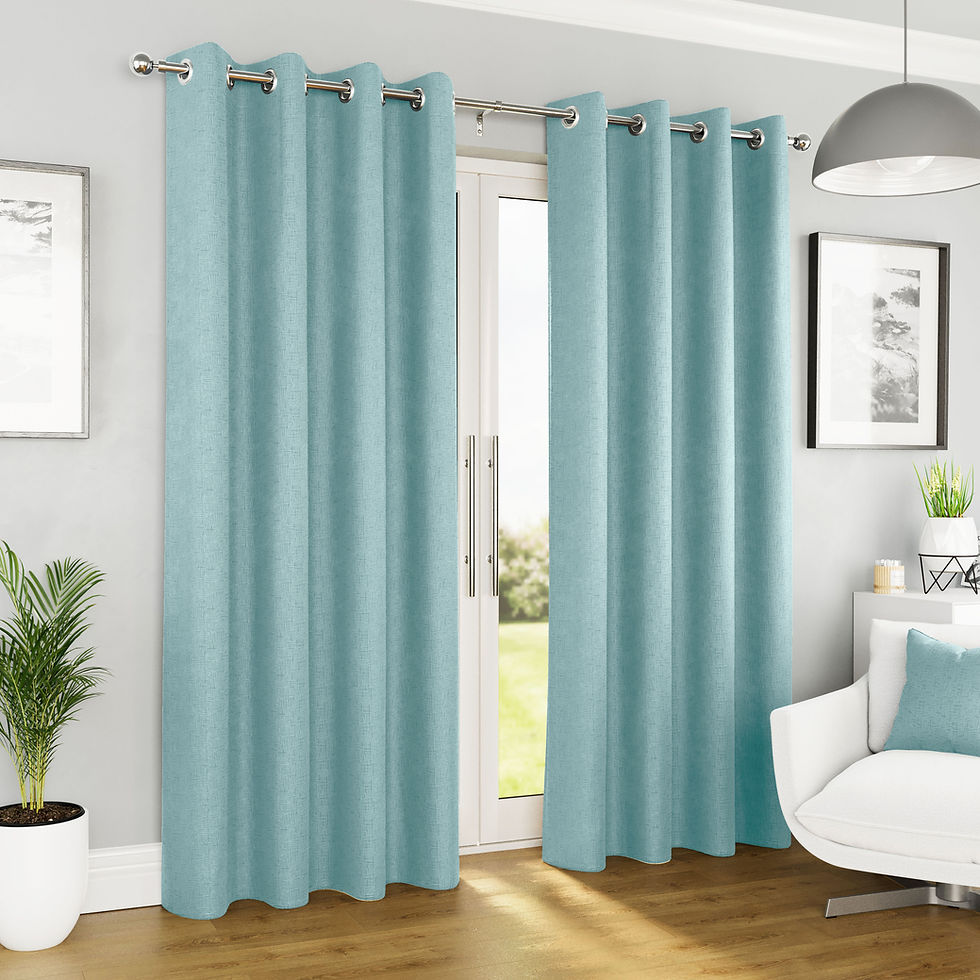
Give functional curtains enough space to be understood
Blackout, room-darkening, thermal and other performance-led curtains are bought for practical reasons as well as appearance. When those benefits are part of the verified product specification, make them easy to identify on the fixture and easy for staff to explain.
Avoid turning the whole range into a list of claims. A customer still has to like the colour and fabric. The practical benefit should help them choose between suitable designs, not replace the design decision altogether.
Do not let one curtain heading dominate by accident
Eyelet curtains are easy to understand and suit customers with poles, while tape-top or pencil-pleat styles can work across a wider mix of tracks and poles depending on the product. If almost everything on the fixture uses one heading, you may be narrowing the customer base without meaning to.
Keep heading information obvious and, where possible, show a physical example. Independent shops have an advantage here because a member of staff can look at the customer’s existing setup and explain the difference quickly.
Think in price points, not just individual prices
You do not need a curtain at every possible retail price. What matters is giving customers a sensible step through the range. An opening price point can bring people into the category, a strong middle band will often carry most of the choice, and a step-up option gives room for better fabric, finishing or functionality where the product genuinely supports it.
The exact price architecture will depend on your own customer base and margins. The useful discipline is to check that two very similar products are not sitting next to each other at nearly the same price while another part of the range has no credible option at all.
Depth in the right sizes can matter more than another design
Once a customer has chosen the curtain, the next question is usually size. This is where a visually strong range can still lose the sale. If the best designs are frequently missing in the widths or drops your customers ask for, adding more designs will not solve the underlying problem.
Review sales by design, colour and size rather than only by total range. That helps separate a weak design from a good design that is simply under-stocked in the sizes that matter locally.
Keep nets and voiles visible as a different window solution
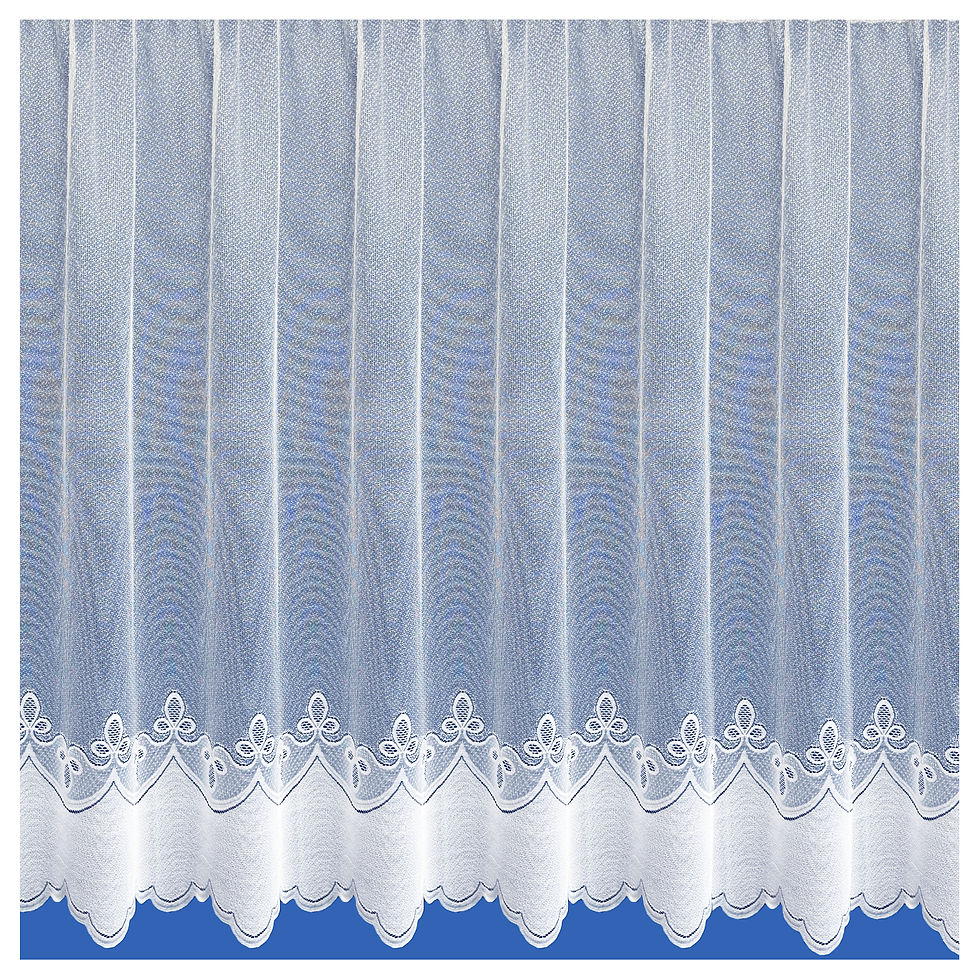
Net curtains and voile panels deserve their own place in the range plan because they solve a different need. Customers may be looking for daytime privacy, a lighter window treatment or something to layer with curtains rather than replace them.
Traditional lace-style nets, cleaner voiles and more decorative sheers can also attract different tastes. Showing that difference clearly is more useful than putting every sheer fabric into one undifferentiated section.
Use the display to show how the range fits together
A curtain fixture should make the assortment easier to understand. That can mean grouping related colours, showing one or two full hanging samples, or pairing a curtain with a coordinating cushion so customers can picture the room rather than just the pack.
You do not need to merchandise every design as a complete room set. A few deliberate combinations are enough to show the logic of the range and create natural cross-sell opportunities without cluttering the department.
Refresh the front of the range without rebuilding everything
A balanced core range should not need replacing every season. What can change is the emphasis. Lighter colours and sheers may deserve more visibility at one point in the year; deeper colours and verified blackout or thermal options may become more relevant at another.
Moving the lead displays, introducing a small number of new colours or patterns and retiring genuine slow sellers can make the department feel fresh without constantly destabilising the lines customers already know.
Review what earns its space
The most useful range review combines the numbers with what staff hear on the shop floor. Look at units sold, colour mix, size demand, repeat purchases, customer requests and returns. A design that sells steadily with very few questions may be doing more work for the range than a visually striking line that attracts attention but rarely converts.
Tyrone Textiles is a trade-only UK supplier of ready-made curtains, net curtains, voile panels and cushions, with the business established in 1978. For independent retailers, the value of a supplier relationship is not simply access to more designs; it is having enough choice to build a range that suits the customers you actually serve.
Frequently asked questions
How many curtain designs should an independent shop stock?
There is no useful fixed number. The range should be broad enough to cover the main colours, styles, functions and headings your customers ask for, but tight enough that you can hold sensible depth in the sizes and colours that actually sell.
Should a curtain range be built around colour or function?
Both matter, but they solve different parts of the buying decision. Colour and style draw the customer in; function such as blackout or thermal performance helps narrow the choice. The strongest ranges make both easy to understand.
How many neutral curtains should a shop carry?
Neutrals usually deserve a strong share of the range, but avoid filling the fixture with near-identical greys, creams and naturals. Aim for useful differences in warmth, depth, texture and pattern so each option earns its place.
Is it better to stock more designs or more sizes?
For many independent retailers, depth in the right sizes can be more useful than adding another very similar design. A customer who has chosen a curtain still needs the correct size, so availability matters once the design decision has been made.
Should net curtains and voile panels sit within the same range plan?
Yes, but treat them as a separate customer need rather than simply lighter versions of ready-made curtains. They answer different questions around privacy, daylight, layering and decorative style.
A smaller, clearer range can be the stronger range
The purpose of range planning is not to remove choice. It is to make the choice useful. If each design has a clear role, the colours work together, the main customer needs are covered and the right sizes are kept in depth, the whole category becomes easier to sell.
That is where an independent retailer can compete particularly well: not by showing the customer endless options, but by curating the right ones and helping them make a confident decision.


