
Net Curtains or Voile Panels? Helping Customers Choose the Right Window Covering
A customer asking for something sheer at the window may be looking for a traditional net curtain, a decorative voile panel or simply a way to soften the view from the street. For independent retailers, the distinction matters because the two formats can involve different measurements, fittings and buying quantities. A short conversation before the sale can prevent a surprising amount of confusion.
Begin with the window, not the product name
Ask whether the customer is dressing a small kitchen window, a bay, a bedroom or a full-height patio door. Establish whether they already have a wire, rod, pole or track. A traditional net sold by the metre may suit a window where the customer wants to select the fabric width, whereas a finished voile panel may suit a customer who wants a ready-made decorative treatment.
Neither format is automatically better. The available drops, heading and fabric construction should guide the recommendation. Show the actual product rather than relying on a broad category label.
Explain how net curtains are sold
Where nets are sold by the linear metre, the customer selects a suitable drop and buys enough width for the desired gathering. For example, a 150 cm fitting with a chosen fullness of twice the fitting width would require three metres of fabric. This is an illustrative calculation, not a universal fullness recommendation. Check the design, any pattern repeat and the retailer’s cutting policy before confirming the order.
Make the price per metre and the total cut price clear. Explain whether side finishing is included or needs arranging, and check the applicable returns terms before cutting fabric to the customer’s requirements.
Explain how finished voile panels are sold
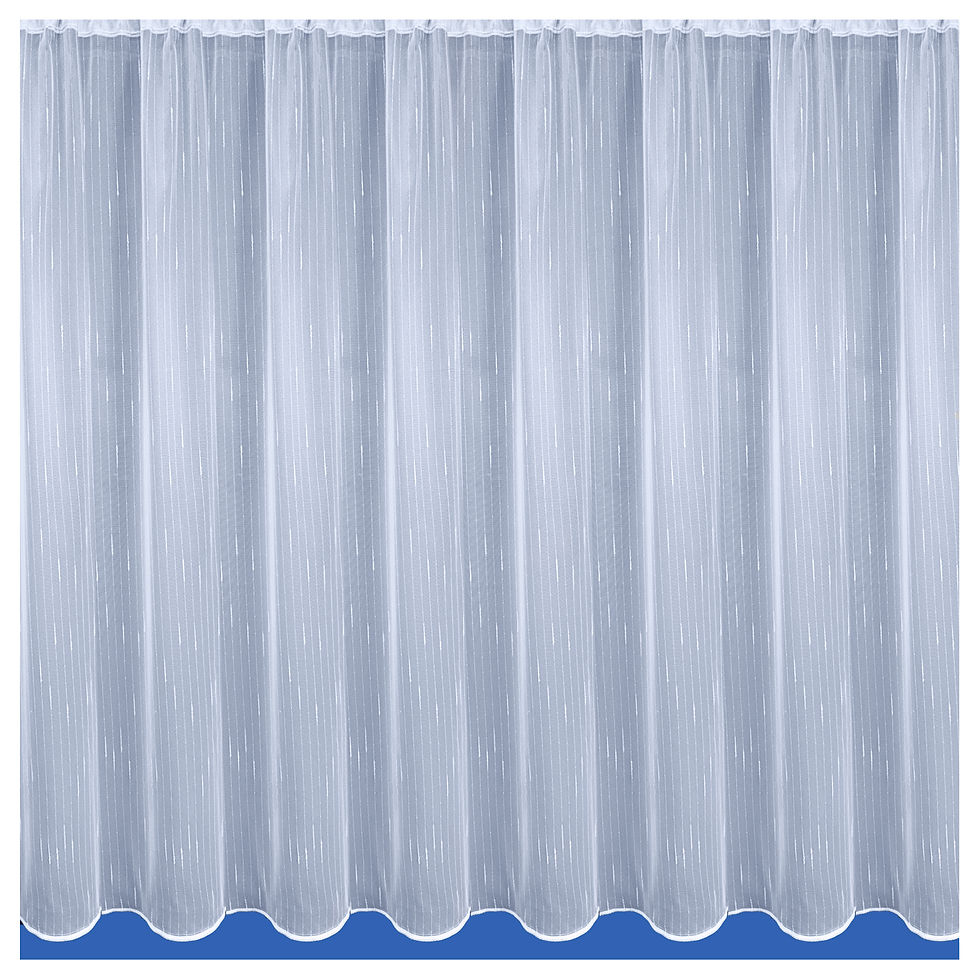
A ready-made voile panel has a specified width and drop. The customer generally chooses the number of panels rather than ordering a continuous length of fabric. Confirm whether the price is for one panel or a pair, and check the heading against the fitting.
For example, two panels each measuring 140 cm flat provide 280 cm of total flat fabric width. Across a 160 cm fitting that gives a nominal fullness of 1.75 times before allowing for any overlap or installation details. Use the actual dimensions of the selected product when calculating quantities.

Be accurate about privacy
Both nets and voiles can soften views into a room during daylight, but the result depends on the fabric and the relative brightness inside and outside. Neither should be sold as guaranteed night-time privacy. When indoor lights are on, a separate curtain or blind may be necessary.
Make the comparison easy in store
Hang representative samples at similar heights and against similar lighting. Let customers compare the openness of the weave, the appearance of gathered fabric and the texture close up. Label the net with its price per metre and the voile with its price per panel or pair, as applicable.
Keep the display focused on the decisions customers need to make. A small selection of neutral fabrics and decorative patterns, supported by clear size information, can be more useful than a large rail without labels.
Build an online listing that prevents quantity mistakes
For nets, state the drop, the unit of sale and how multiple metres will be supplied. For voiles, show the dimensions of each panel and the pack quantity beside the price. Include a heading photograph and the relevant care instructions. Avoid using a styled image to imply that additional products or fittings are included.
Plan the assortment around actual demand
Review net sales by metres and voile sales by panels or packs rather than comparing raw quantities directly. Compare net revenue, gross margin and stock availability by design and drop. A popular net may generate many metres from a single order, while a voile purchase may consist of only one or two panels.
Track which drops customers request but cannot buy. That information can help trade buyers decide whether to deepen stock in existing designs or introduce a different format. Keep the most dependable options easy to replenish.
The retail takeaway
The best recommendation begins with the fitting, the desired appearance and the customer’s privacy expectations. Explain the unit of sale, calculate the quantity using the actual product dimensions and confirm what is included. Clear advice makes both nets and voiles easier to sell and helps customers choose with confidence.


